
Looking back to move forward: CKH Group CEO on 2025's successes and lessons
As the year comes to a close, I’ve found myself doing something I don’t always slow down enough to do: reflecting.
Though I’ve been with CKH for quite a while, this year marked my first year as its CEO. It came with excitement, responsibility, connection and a fair amount of learning; and not always the kind you get from books or conferences (though there were plenty of those).
What surprised me most is that the biggest lessons didn’t come from big decisions. They came from small ones, the everyday moments and conversations that quietly shape you. Looking back, a few themes kept showing up again and again, so I’ve bundled five of these lessons together below.
1. Presence Matters More Than You Think
Fall and wintertime is always a magical time in the United States. People taking holidays and spending time with their family, slowing down before year end. It’s in this moment that you get more of a chance to spend more quality time with your team when you’ve got excellent excuses to connect like Thanksgiving or end-of-year celebrations.
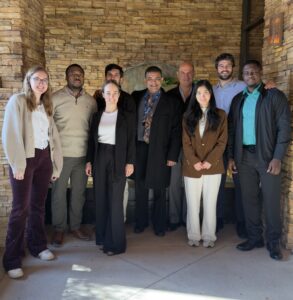
For Thanksgiving, we shared a lunch with some of our team in the office, talked about work, life, and everything in between. Nothing super formal. Recently, we also conducted a ‘virtual happy hour’ in which our leadership led a game of Pictionary. These moments are small, and sometimes feel a little silly, but they matter.
Being present with your team builds trust in ways no announcement or strategy ever could. I’ve learned that leadership isn’t always coming up with a master strategy and constant direction. Sometimes it shows up in sitting down, listening, and simply being there to connect one-on-one. To remember that we all are human, and sometimes all we really need (especially to build resilient teams!) is to be seen, heard, and valued.
2. People Define the Experience

With all the traveling I’ve done this past year to connect with clients and teams, I’m often asked about my favorite cities to visit in the U.S., and my top answer still surprises people.
Most may start with popular tourism hotspots like New York or Los Angeles, but for me it’s not about the skyline, the weather, or the attractions. It’s about the people. Places feel meaningful when you feel welcomed, understood, and connected. That realization applies just as much to organizations as it does to cities.
Companies don’t succeed just because of the product or service they offer. They succeed because of the people who drive creativity, who are constantly looking to improve, who make each other and clients feel welcomed- exactly what I feel every time I reconnect with clients.
3. Culture Is Shaped Daily, Not Occasionally
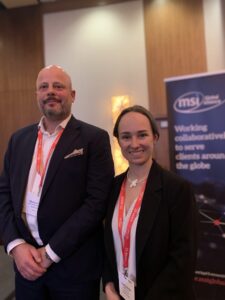
One line I heard at a conference this year really stayed with me:
“Culture is the outcome of what we encourage or ignore.”
With all this talk of people and presence, this line really emphasized this ideal. It was yet another reminder that culture is not something you declare. It is not enough to say that ‘we have a culture of trust, of reaching higher and lifting each other up’. It’s something you experience. It’s built in the day‑to‑day moments, when we give clear feedback, when we say thank you for specific work, and when we address behavior that doesn’t align with our values instead of avoiding an uncomfortable conversation.
If we only ever say “great job” and never provide guidance, clarity, or course correction, we don’t actually have a strong culture. We just have polite confusion. Real culture requires honesty, consistency, and the willingness to speak up when it matters.
4. Technology Is Only as Smart as the Experience It Creates
This year also reinforced something I’ve believed for a long time: not every problem needs a complex or flashy solution.
I had a simple travel experience recently where online check‑in failed, and three airport agents spent nearly forty minutes resolving what should have taken two. It wasn’t a lack of intelligence or effort, it was just a poorly designed process.
We talk a lot about AI and automation, and they absolutely have their place – but not all solutions are solved by slapping AI onto it. First, you need to improve the process itself. Real progress in user experience often comes from thoughtful design, clear processes, and systems that actually work for people. Then- once the process is clear and defined –you identify areas where automations or AI could make it even faster and smoother.
5. Community and Service Put Things in Perspective
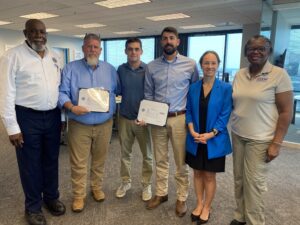
Being involved in community efforts this year, whether supporting veterans, volunteering locally, or personally spending time with organizations that serve others, has been grounding. It’s a reminder that fulfillment doesn’t come solely from professional achievement.
When things are going well personally and professionally, giving back becomes even more meaningful. It shifts your focus outward and reinforces that business is not separate from the communities we operate in. I see this all the time within the government contracting work that we do and how we can directly improve our local Georgia communities.
Ending the Year with Gratitude
This first year as CEO has been busy, challenging, and deeply rewarding. I’ve learned that most of our fears are just in our heads, that clarity often comes after reflection, and that people are what ultimately drive success.
As we head into the holidays and prepare for a new year, I’m grateful for the trust placed in me, for the team I get to work alongside, and for the lessons that came from simply paying attention.
If this year taught me anything, it’s that growth happens when you stay curious, stay connected, and don’t rush past the moments that matter.
Here’s to closing the year with gratitude, and stepping into the next one with purpose.”